
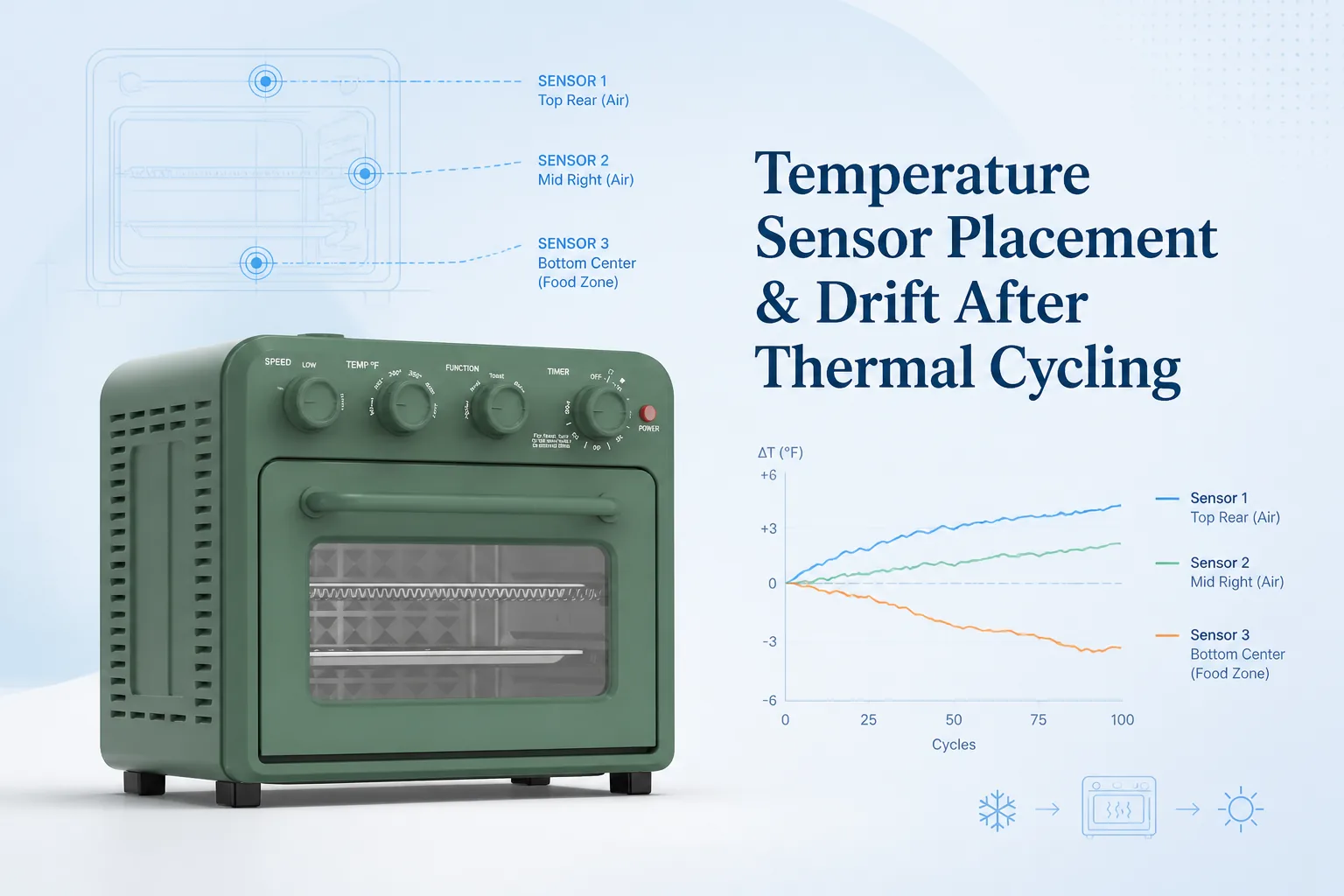
The control sensor is not the food temperature
How sensor location, mounting, tolerance and long-term drift can change displayed temperature, cooking uniformity and field complaints. In a B2B oven programme, the useful question is not whether a supplier can quote a headline claim, but whether the result can be repeated on production-intent hardware and compared across markets.
Define a repeatable mapping method
A repeatable project method can use a defined multi-point grid, independent reference probes and repeated runs; the exact grid and acceptance limits must be agreed for the product. Define the product revision, voltage, frequency, ambient condition, load, rack position, programme and sample count before the first comparison. Keep the raw log, photographs of the setup and the calibration status of the instruments.
Test drift, mounting and harness variation
Sensor tolerance, connector resistance, harness routing and heat ageing can move the control point even when the firmware is unchanged. A single factory demonstration can show what is possible; it cannot show normal variation, ageing or the effect of a component change. Repeat close-to-limit results on additional production-representative units and state the acceptance rule before looking at the result.
Use the result in software and hardware reviews
IEC 60350-1 provides performance-method context, but sensor-drift limits are product specifications that should be based on use case and risk. Put the metric, test method, document owner and change trigger into the RFQ and sample-approval file. If the specification, supplier, material, firmware or process changes, decide in advance whether the evidence must be repeated.
Evidence to retain
The reference is a framework, not an automatic certificate of compliance. Confirm the applicable edition, national adoption, laboratory scope and target-market rules before making a claim. Useful source references include the cited IEC, ISO, ENERGY STAR, European Commission, ISTA, ASTM or CISPR material above.
- Target market and intended use confirmed
- Production-intent sample and revision recorded
- Method, instruments and calibration status documented
- Acceptance limit agreed before testing
- Raw evidence retained with change-control rules