
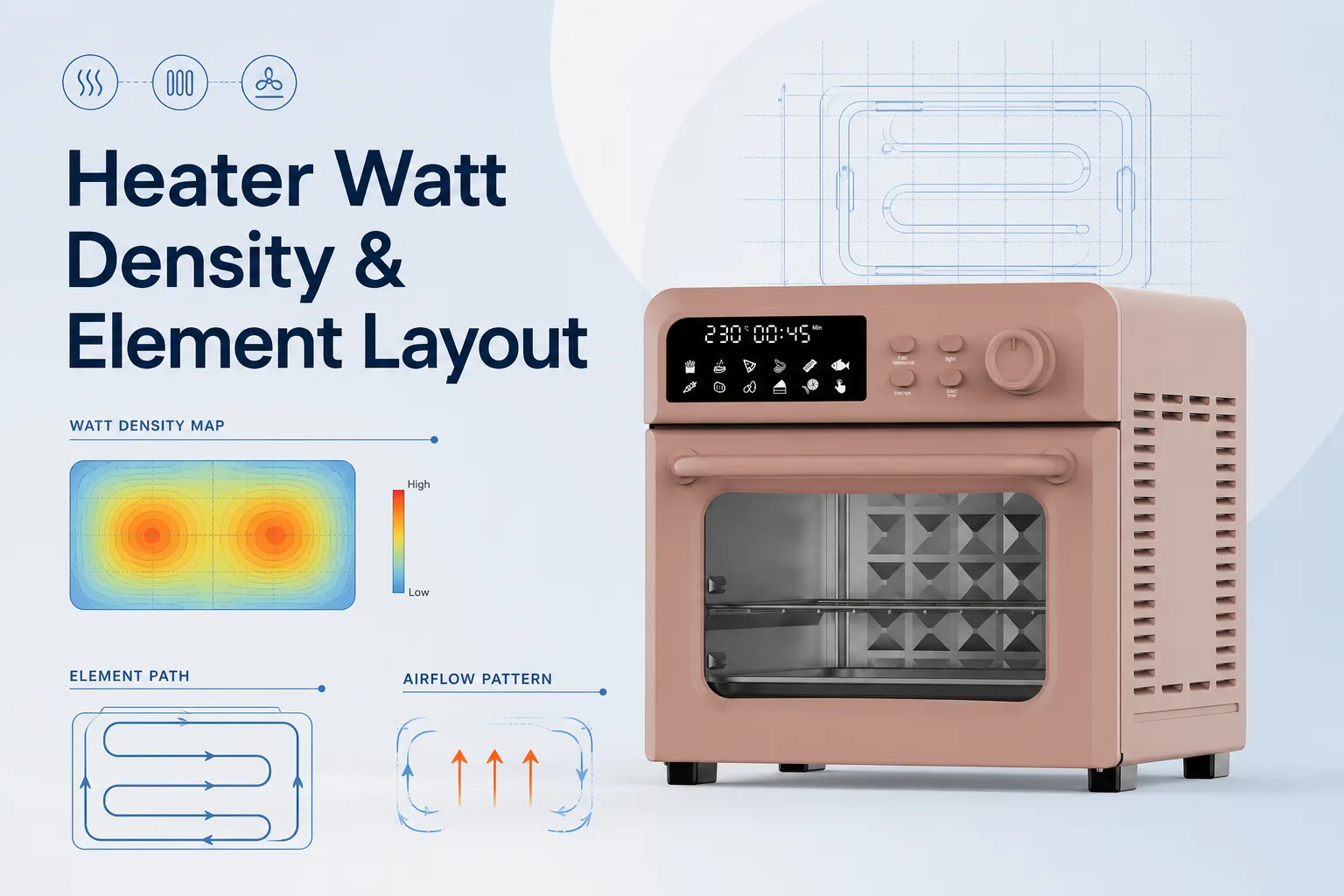
Why rated wattage is not enough
A technical buyer’s guide to comparing element loading, radiant coverage, airflow and endurance instead of treating rated power as a performance guarantee. In a B2B oven programme, the useful question is not whether a supplier can quote a headline claim, but whether the result can be repeated on production-intent hardware and compared across markets.
Calculate a useful comparison metric
Watt density is a comparison metric, commonly calculated as rated input divided by active element area; any example value is design-specific, not a safety limit. Define the product revision, voltage, frequency, ambient condition, load, rack position, programme and sample count before the first comparison. Keep the raw log, photographs of the setup and the calibration status of the instruments.
Map the heat in real operating conditions
IEC 60350-1 performance methods help structure repeatable cooking tests, while the applicable IEC 60335 safety standard governs clearances, abnormal operation and accessible temperatures. A single factory demonstration can show what is possible; it cannot show normal variation, ageing or the effect of a component change. Repeat close-to-limit results on additional production-representative units and state the acceptance rule before looking at the result.
Connect thermal results to durability
A thermal map should include nominal and high-line voltage, empty and loaded cavity conditions, cycling behaviour and temperatures near terminations. Put the metric, test method, document owner and change trigger into the RFQ and sample-approval file. If the specification, supplier, material, firmware or process changes, decide in advance whether the evidence must be repeated.
Evidence to retain
The reference is a framework, not an automatic certificate of compliance. Confirm the applicable edition, national adoption, laboratory scope and target-market rules before making a claim. Useful source references include the cited IEC, ISO, ENERGY STAR, European Commission, ISTA, ASTM or CISPR material above.
- Target market and intended use confirmed
- Production-intent sample and revision recorded
- Method, instruments and calibration status documented
- Acceptance limit agreed before testing
- Raw evidence retained with change-control rules