
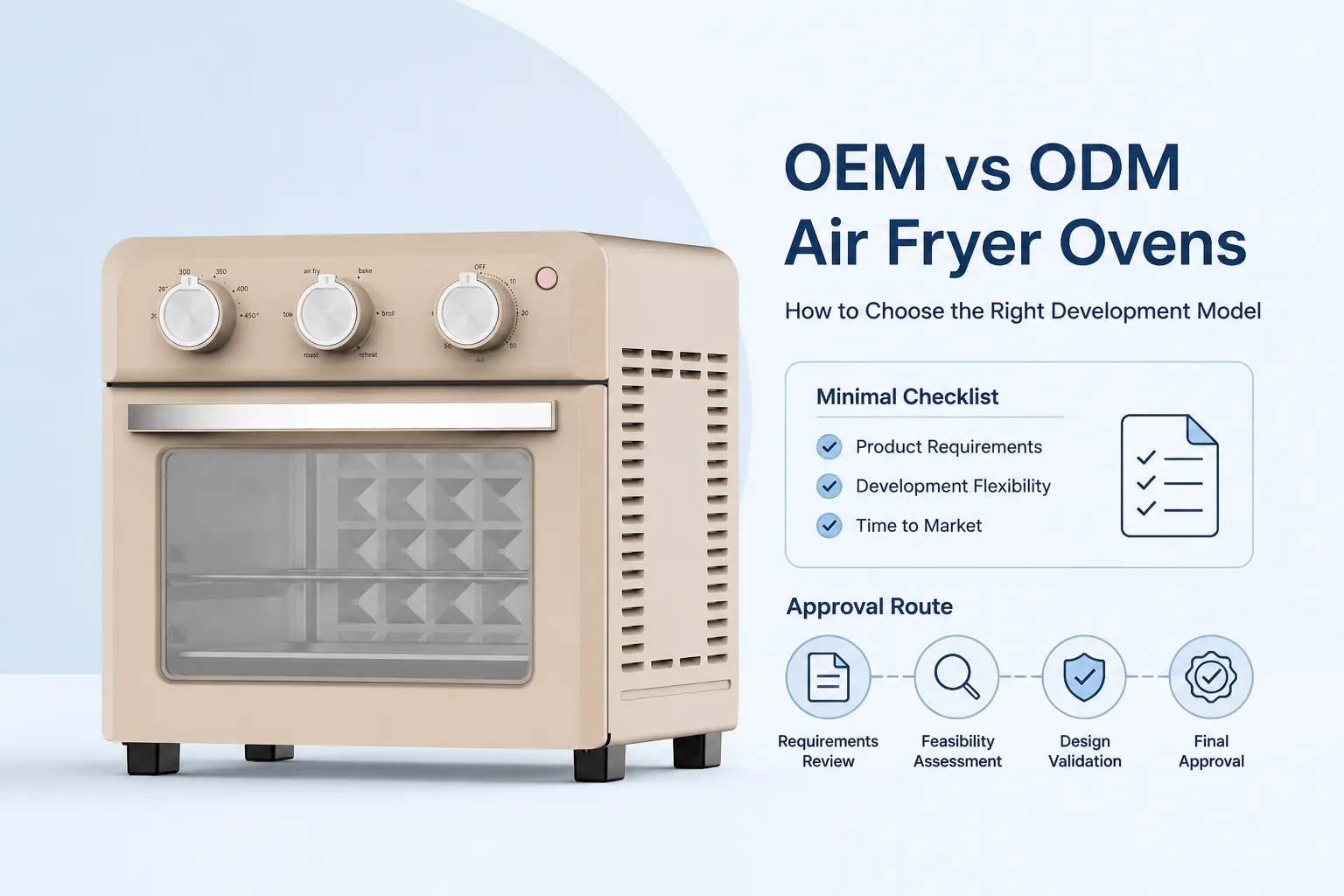
Define the work model in plain language
A commercial and engineering framework for choosing OEM, ODM or a hybrid route while protecting specification control, tooling rights and launch timing. In a B2B oven programme, the useful question is not whether a supplier can quote a headline claim, but whether the result can be repeated on production-intent hardware and compared across markets.
Compare control, speed and risk
ISO 9001:2015 provides a quality-management framework, but it does not decide who owns tooling, firmware or certification data; those rights belong in the contract. Define the product revision, voltage, frequency, ambient condition, load, rack position, programme and sample count before the first comparison. Keep the raw log, photographs of the setup and the calibration status of the instruments.
Cost the complete programme
ISO 31000:2018 is a useful risk language for comparing lead time, engineering control, single-source exposure and exit options. A single factory demonstration can show what is possible; it cannot show normal variation, ageing or the effect of a component change. Repeat close-to-limit results on additional production-representative units and state the acceptance rule before looking at the result.
Write the rights and change rules
Total programme cost should include tooling, sample rounds, testing, artwork, spares, engineering changes and the cost of switching supplier—not only unit price. Put the metric, test method, document owner and change trigger into the RFQ and sample-approval file. If the specification, supplier, material, firmware or process changes, decide in advance whether the evidence must be repeated.
Evidence to retain
The reference is a framework, not an automatic certificate of compliance. Confirm the applicable edition, national adoption, laboratory scope and target-market rules before making a claim. Useful source references include the cited IEC, ISO, ENERGY STAR, European Commission, ISTA, ASTM or CISPR material above.
- Target market and intended use confirmed
- Production-intent sample and revision recorded
- Method, instruments and calibration status documented
- Acceptance limit agreed before testing
- Raw evidence retained with change-control rules