
Start with the buyer decision
A countertop oven is not validated because it heats up, looks polished, or has a long feature list. A purchasing team needs to decide whether the exact configuration can produce a repeatable result in the intended market and channel. For food-contact materials, cleanability and maintenance information for countertop ovens, begin with the claimed customer outcome, then identify the observable condition that supports it. Keep the target product, electrical version, accessories, rack position, food load, test method and pass criterion together. That prevents a supplier, importer and retailer from using the same word for different results. A clear brief also makes sample reviews faster because each observation can be linked back to a known requirement rather than to a general preference.
Use the evidence for its proper purpose
The public sources below are useful because they distinguish a measured condition from a marketing statement. They do not convert a buyer checklist into a legal approval or a guarantee of performance. The European Commission explains that food-contact materials must not transfer constituents into food in quantities that could endanger human health or unacceptably change food composition, taste or odour. FDA food-contact substance information explains the U.S. framework for substances intended for use in materials that contact food. Read the original source for the applicable scope, date and definitions. A home appliance buyer should ask a qualified compliance or food-safety professional when a claim, target market or intended use needs a formal interpretation. The practical lesson is simple: record the method, record the result, and do not silently transfer a result from one configuration to another.
Define the representative configuration
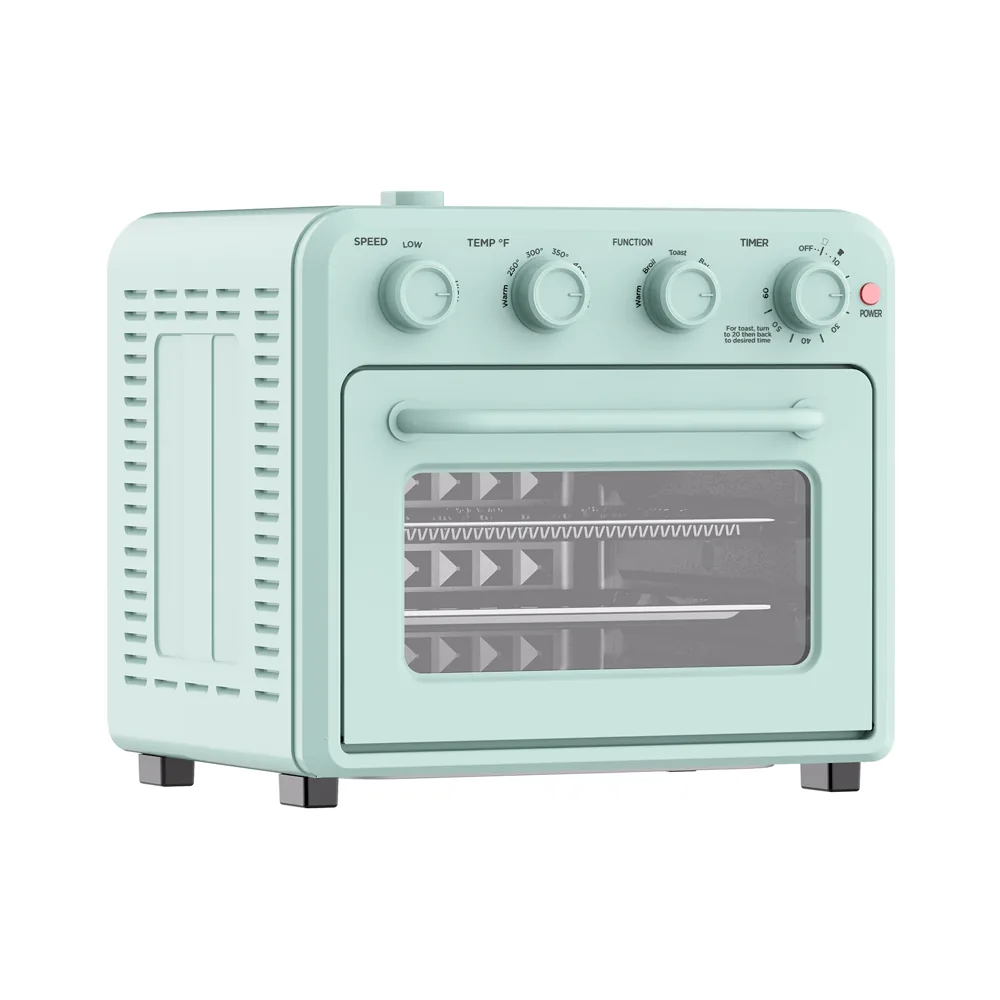
Write down the oven model, firmware or control revision where relevant, cavity volume, voltage and frequency, power rating, door construction, fan setting, accessories and the precise programme used. A change in tray, rack height, airflow obstruction, food mass, cold or room-temperature start, or preheat condition can alter the outcome. The sample plan should state whether the article is testing the base platform or a customer configuration. Use photographs and a revision-controlled test sheet so the same setup can be rebuilt later. This is especially important when a brand will offer several colours, control panels or bundled accessories from one production platform.
Make the method repeatable
A repeatable protocol states who performs the test, what instruments are used, how they are checked, where measurements are taken, how many runs are made and how exceptions are handled. Use a written start condition and a written stop condition. Capture raw observations before calculating an average. If a value is outside the expected range, retain it and investigate rather than removing it merely because it is inconvenient. A small buyer team does not need a laboratory for every decision, but it does need enough control to tell whether a later difference comes from the oven, the food, the operator or the method.
Separate product capability from safe use
A specification should not invite a consumer to rely on a display setting alone. Material names alone do not prove a complete compliance position. Buyers need a configuration-specific materials declaration, appropriate test or regulatory evidence where required, and cleaning instructions that fit the actual coated surfaces, glass, racks and removable accessories. Consumer instructions, recipes and support material should explain the right verification method for the food and use case. For risk-sensitive cooking, an internal food-temperature measurement is more meaningful than an oven air-temperature display. This distinction protects the brand: it avoids making a general appliance claim sound like a food-safety guarantee, while still giving the buyer a usable engineering and communication checklist.
Review the controls and user interface
Ask whether the displayed temperature, time, preheat indication, preset label and end signal help the intended customer make a correct decision. The question is not whether a feature exists; it is whether the feature is understandable under normal use. Test the display in realistic light, with typical kitchen noise, and with a user who did not write the instructions. Record where a user has to guess. Clear units, a sensible default, an audible completion signal, safe restart behaviour and instructions that match the actual accessories can reduce avoidable support contacts after launch.
Test across realistic operating conditions
One attractive trial is a demonstration, not a validation plan. Vary the load, rack position and programme within the intended use. Where the product will be sold in more than one market, confirm the relevant electrical version instead of assuming one test covers all variants. Repeat a limited number of high-value tests after a change to the control board, heater, fan, door, coating or accessory. The point is not to generate a large pile of data. It is to make the conditions most likely to create customer dissatisfaction visible before production release.
Connect supplier evidence to the exact model
A certificate, an energy result, a materials declaration or a factory procedure is only useful when the buyer can identify what it applies to. Ask for the model name, revision, sample date, laboratory or responsible party, relevant accessories and test scope. If the quotation describes a different voltage, door, tray or control panel, ask for an explanation. Keep the supporting files next to the approved product specification. This makes handover easier when a retailer, marketplace, insurer or internal quality team asks a question months after the first purchase order.
Build a sensible acceptance plan
Create three groups: non-negotiable requirements, targets that may be optimized, and observations for future improvement. Give each non-negotiable item a pass condition and a defined response when it fails. An acceptance plan should also state who may approve a deviation and whether it requires a new sample, a corrected instruction, a supplier action or a formal risk decision. Avoid invented universal tolerances. The correct acceptance band depends on the product, claim, market and method. The value of the plan lies in making the decision rule explicit before the result is known.
Protect the production handover
After sample approval, protect the version that was actually reviewed. Link the approved sample, bill of materials, artwork, user instructions, inspection points, packaging configuration and change-control process. Ask what happens if a component becomes unavailable or a sub-supplier proposes a change. A factory can be well organized and still need a buyer decision when a change affects the agreed feature or evidence. A short written change gate is more useful than an informal promise that the production line will make “the same” oven.
Use field information responsibly
Once the product is selling, collect customer questions, returns reasons, repair observations and retailer feedback in categories that can be compared. Do not present a handful of comments as a statistical result. Look for patterns that point to instructions, accessory fit, cleaning, control interpretation, packaging or a repeatable product condition. Feed confirmed findings back into the next specification and sample plan. This turns post-launch information into an improvement loop without exaggerating early data or making claims that have not been measured.
Plan the commercial conversation
For an OEM discussion, provide the target market, channel, electrical version, forecast range, required documents, intended use, accessory plan and the result that will unlock a purchase decision. Ask the supplier to identify open questions rather than guessing. This produces a more useful quotation because engineering work, sample timing, tooling, testing and packaging are connected to the same brief. It also gives a procurement team a clear record of what is confirmed, what is assumed and what must be decided before a production release.
A practical buyer checklist
Sources and notes
These sources support the technical context in this article. They are not a substitute for market-specific legal advice, accredited testing, a product risk assessment or the supplier’s model-specific documentation.
Additional procurement note
A buyer should keep the scope of a result as carefully as the result itself. Record the product revision, the method and the decision reached. If any of those changes, decide whether the earlier evidence still applies. This simple discipline makes technical discussions clearer for engineering, quality, sales and customer-support teams, and it avoids turning a limited sample observation into a broad promise.
Additional procurement note
A buyer should keep the scope of a result as carefully as the result itself. Record the product revision, the method and the decision reached. If any of those changes, decide whether the earlier evidence still applies. This simple discipline makes technical discussions clearer for engineering, quality, sales and customer-support teams, and it avoids turning a limited sample observation into a broad promise.
Additional procurement note
A buyer should keep the scope of a result as carefully as the result itself. Record the product revision, the method and the decision reached. If any of those changes, decide whether the earlier evidence still applies. This simple discipline makes technical discussions clearer for engineering, quality, sales and customer-support teams, and it avoids turning a limited sample observation into a broad promise.
Additional procurement note
A buyer should keep the scope of a result as carefully as the result itself. Record the product revision, the method and the decision reached. If any of those changes, decide whether the earlier evidence still applies. This simple discipline makes technical discussions clearer for engineering, quality, sales and customer-support teams, and it avoids turning a limited sample observation into a broad promise.
Additional procurement note
A buyer should keep the scope of a result as carefully as the result itself. Record the product revision, the method and the decision reached. If any of those changes, decide whether the earlier evidence still applies. This simple discipline makes technical discussions clearer for engineering, quality, sales and customer-support teams, and it avoids turning a limited sample observation into a broad promise.
Additional procurement note
A buyer should keep the scope of a result as carefully as the result itself. Record the product revision, the method and the decision reached. If any of those changes, decide whether the earlier evidence still applies. This simple discipline makes technical discussions clearer for engineering, quality, sales and customer-support teams, and it avoids turning a limited sample observation into a broad promise.
Additional procurement note
A buyer should keep the scope of a result as carefully as the result itself. Record the product revision, the method and the decision reached. If any of those changes, decide whether the earlier evidence still applies. This simple discipline makes technical discussions clearer for engineering, quality, sales and customer-support teams, and it avoids turning a limited sample observation into a broad promise.
Additional procurement note
A buyer should keep the scope of a result as carefully as the result itself. Record the product revision, the method and the decision reached. If any of those changes, decide whether the earlier evidence still applies. This simple discipline makes technical discussions clearer for engineering, quality, sales and customer-support teams, and it avoids turning a limited sample observation into a broad promise.
Additional procurement note
A buyer should keep the scope of a result as carefully as the result itself. Record the product revision, the method and the decision reached. If any of those changes, decide whether the earlier evidence still applies. This simple discipline makes technical discussions clearer for engineering, quality, sales and customer-support teams, and it avoids turning a limited sample observation into a broad promise.
Additional procurement note
A buyer should keep the scope of a result as carefully as the result itself. Record the product revision, the method and the decision reached. If any of those changes, decide whether the earlier evidence still applies. This simple discipline makes technical discussions clearer for engineering, quality, sales and customer-support teams, and it avoids turning a limited sample observation into a broad promise.
Additional procurement note
A buyer should keep the scope of a result as carefully as the result itself. Record the product revision, the method and the decision reached. If any of those changes, decide whether the earlier evidence still applies. This simple discipline makes technical discussions clearer for engineering, quality, sales and customer-support teams, and it avoids turning a limited sample observation into a broad promise.
Additional procurement note
A buyer should keep the scope of a result as carefully as the result itself. Record the product revision, the method and the decision reached. If any of those changes, decide whether the earlier evidence still applies. This simple discipline makes technical discussions clearer for engineering, quality, sales and customer-support teams, and it avoids turning a limited sample observation into a broad promise.