
The commercial decision
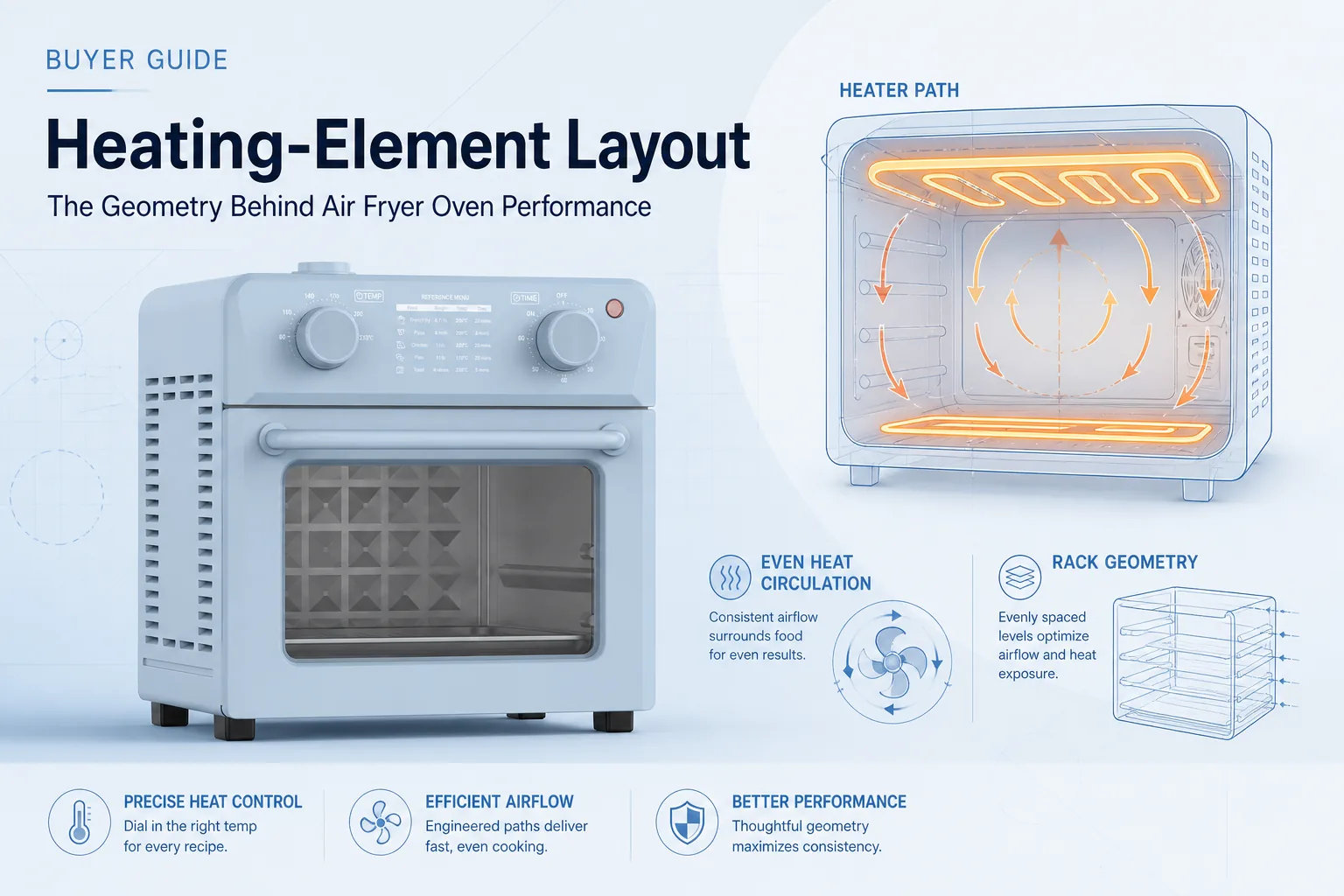
Total wattage does not describe where heat reaches the food. Element length, location, reflector geometry, fan flow and distance to each rack determine radiant intensity and air temperature distribution. Moving a heater by a small distance can also change wire, insulation and guard temperatures.
What the evidence can support
For a resistive element, local loading depends on power and active heated length, while food sees a combination of radiation and convection. A short bright element can brown rapidly near its line of sight and still leave shielded zones pale. Dense food loading can redirect airflow and expose weaknesses that are invisible in an empty cavity.
A repeatable way to compare suppliers
Map cavity air temperature and food colour at every intended rack position with the nominated trays. Include warm-up, steady operation, thermostat cycling and blocked or high-load conditions required by the risk plan. Record heater drawing revision, resistance, supply voltage and termination temperatures.
Cost and launch consequences
Use the map to decide which rack positions can support each preset and claim. Control reflector material, element mounting and fan duct gaps as critical characteristics. If a supplier changes any of them, require delta validation before shipment.
Boundaries on the claim
A thermal camera image is useful only with emissivity, viewing angle, load and time documented. It does not replace contact measurements or applicable safety tests, and a single attractive heat map does not establish cooking consistency.
Sources and scope
The references below define measurement, safety, quality or regulatory context. They do not replace product-specific testing or legal review for the final construction and market. Accessed 7 August 2026.
- IEC 60335-1 and IEC 60335-2-9, household appliance safety and portable cooking appliances: https://webstore.iec.ch/
- IEC 60350-1, electric cooking ranges, ovens, steam ovens and grills - methods for measuring performance: https://webstore.iec.ch/
- European Union, Low Voltage Directive 2014/35/EU: https://eur-lex.europa.eu/eli/dir/2014/35/oj